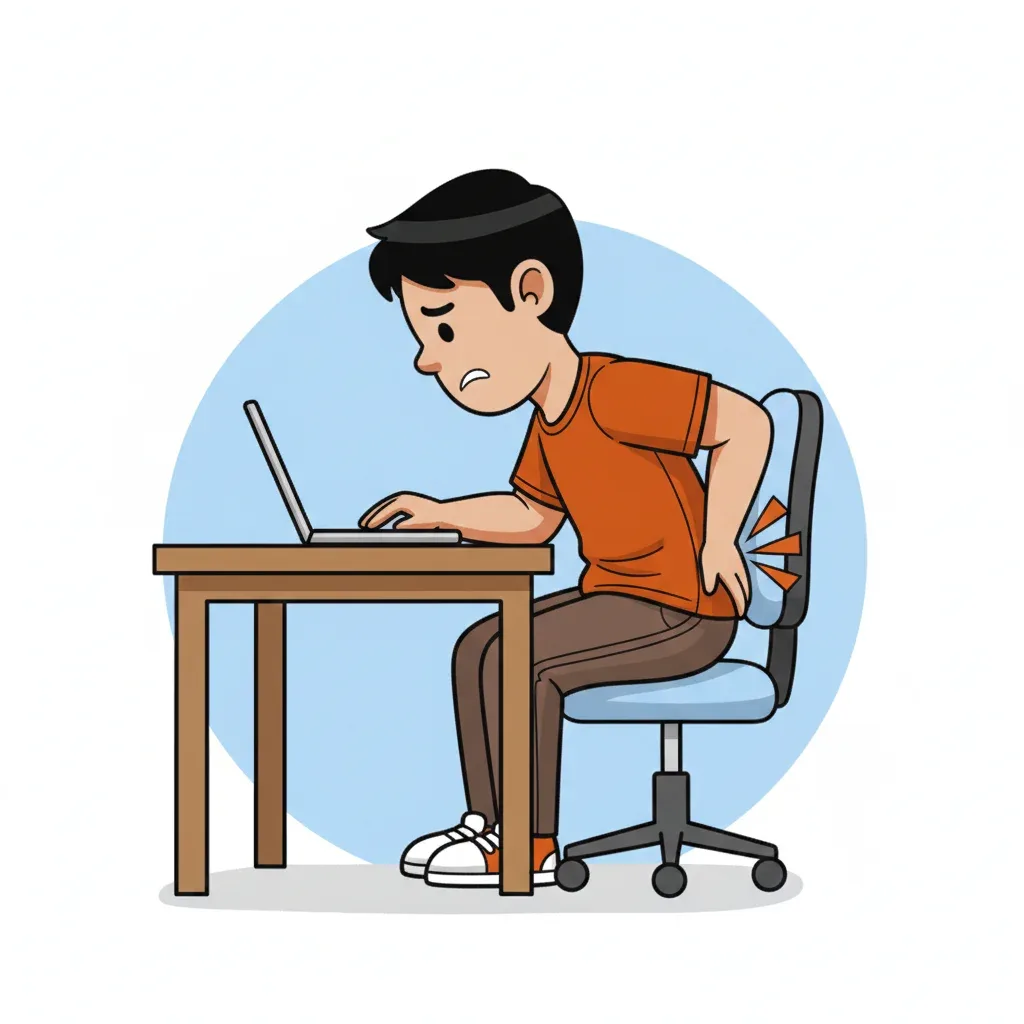
We sit more than ever — at work, in the car, and at home. But sitting for hours every day can take a serious toll on your lower back. If you’ve ever stood up from your chair and felt stiffness or pain, you’re not alone. In this article, I’ll explain how prolonged sitting affects your lower back and what you can do to prevent pain.
Increased pressure on the spine
Sitting, especially with poor posture, places more pressure on the lower back than standing or lying down.
Muscle imbalances
Prolonged sitting weakens your glutes and core muscles while tightening your hip flexors, leading to instability and back pain.
Decreased circulation
Sitting too long slows blood flow, causing stiffness and reduced mobility in the lower back.
Poor posture habits
Slouching or leaning forward strains the spine, ligaments, and muscles. Over time, this can lead to chronic lower back pain.
Stiffness after sitting for more than 30-45 minutes
Aching pain in the lower back and hips
Pain that improves after standing or moving
Tight hip flexors or hamstrings
Keep your feet flat on the floor
Maintain a small curve in your lower back
Keep your shoulders relaxed and head aligned over your spine
Use a chair with lumbar support
Stand up, stretch, and move every 30 minutes. Even 1-2 minutes of movement can reduce spinal pressure.
Add simple exercises to your daily routine to support your spine:
Glute bridges
Side planks
Bird-dog exercises
Focus on stretches for:
Hip flexors
Hamstrings
Lower back
Chest muscles (to correct posture)
Alternating between sitting and standing reduces spinal stress and promotes healthy posture.
Sitting is part of modern life, but it doesn’t have to ruin your lower back. With simple posture corrections, movement breaks, and targeted exercises, you can protect your back and prevent stiffness and pain.

 February 13, 2026
Lower back pain is common and, in most cases, manageable with rest, exercises, and lifestyle adjustments. But sometimes, pain is a sign that something more serious is going on. In this article, we’ll explain when lower back pain is more than just discomfort — and when you should see a doctor immediately.
 January 10, 2026
Exercise is a powerful tool for improving health and mobility—but not all exercises are suitable for everyone. If you’re struggling with lower back pain, certain movements can do more harm than good. In this article, I’ll walk you through five popular exercises that can actually worsen lower back pain, and I’ll suggest safer alternatives to keep your spine healthy and pain-free.
 January 10, 2026
Do you wake up with lower back pain that gets better as the day goes on? Morning back pain is a common complaint and can have several causes, from sleeping positions to underlying conditions. In this article, I’ll explain why lower back pain happens in the morning and how you can prevent it for good.
 REHUB
REHUB