Lower back pain is common and, in most cases, manageable with rest, exercises, and lifestyle adjustments. But sometimes, pain is a sign that something more serious is going on. In this article, we’ll explain when lower back pain is more than just discomfort — and when you should see a doctor immediately.
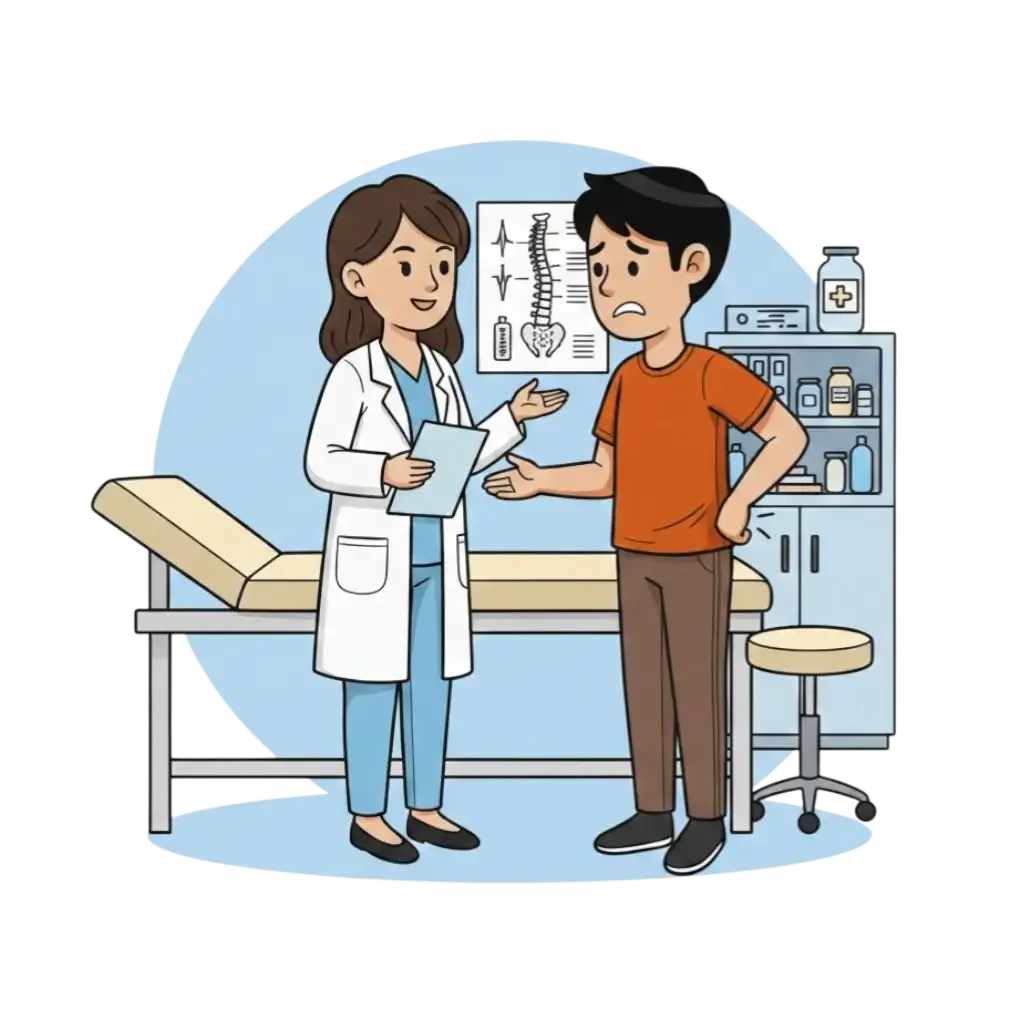
If you feel sharp pain, tingling, or numbness running from your lower back into one or both legs, it could indicate nerve compression, often due to a herniated disc or sciatica.
➡️ Don’t ignore it if: The pain worsens, affects your ability to stand or walk, or causes leg weakness.
Sudden problems with bladder or bowel control, along with severe lower back pain, can be a sign of cauda equina syndrome — a rare but serious medical emergency.
➡️ Seek immediate medical help!
If your back pain stays constant for weeks despite rest and gentle exercises, it could signal something more serious, like an infection, inflammation, or a structural problem in the spine.
➡️ Consult your doctor if pain persists beyond 2-4 weeks.
Lower back pain combined with fever, chills, or sudden unexplained weight loss can indicate infection or even cancer in rare cases.
➡️ Always see a doctor for these symptoms.
If your lower back pain started after a fall, car accident, or sports injury, don’t try to treat it at home. You might have a fracture or disc injury.
➡️ Get checked by a healthcare professional to rule out serious damage.
While mild stiffness is common, severe stiffness and pain in the morning that lasts for long periods could point to inflammatory conditions like ankylosing spondylitis.
➡️ Early diagnosis and treatment are key.
Avoid heavy lifting or sudden twisting
Use ice or heat for temporary relief
Gentle walking and stretching (if it doesn’t worsen symptoms)
Keep track of your symptoms to report to your doctor
Most lower back pain can be handled with care and exercise, but some signs should never be ignored. If you experience any of these symptoms, don’t wait — see a healthcare provider. Early action can prevent serious complications.
 January 10, 2026
Exercise is a powerful tool for improving health and mobility—but not all exercises are suitable for everyone. If you’re struggling with lower back pain, certain movements can do more harm than good. In this article, I’ll walk you through five popular exercises that can actually worsen lower back pain, and I’ll suggest safer alternatives to keep your spine healthy and pain-free.
 January 10, 2026
Do you wake up with lower back pain that gets better as the day goes on? Morning back pain is a common complaint and can have several causes, from sleeping positions to underlying conditions. In this article, I’ll explain why lower back pain happens in the morning and how you can prevent it for good.
 March 21, 2025
We sit more than ever — at work, in the car, and at home. But sitting for hours every day can take a serious toll on your lower back. If you’ve ever stood up from your chair and felt stiffness or pain, you’re not alone. In this article, I’ll explain how prolonged sitting affects your lower back and what you can do to prevent pain.
 REHUB
REHUB